Long holidays offer a welcome opportunity to recharge—but for laboratories and biobanks, valuable biological samples require continuous protection, even when personnel are away.
A single equipment failure can result in the irreversible loss of years—or even decades—of research. Before your team leaves for an extended holiday, it is worth reviewing the condition of your cryogenic storage systems, monitoring infrastructure, and emergency preparedness.

A Reminder from a Real-World Incident
In late 2023, a liquid nitrogen supply interruption at Sweden's Karolinska Institutet led to the loss of a large number of valuable biological samples stored in multiple freezers. According to the institute's investigation, the incident was not caused by a single equipment failure, but by a combination of technical shortcomings, inadequate management practices, insufficient infrastructure inspection, and unclear responsibilities.
The event serves as an important reminder that protecting biospecimens requires more than reliable equipment—it also depends on effective monitoring, preventive maintenance, and well-defined emergency procedures.
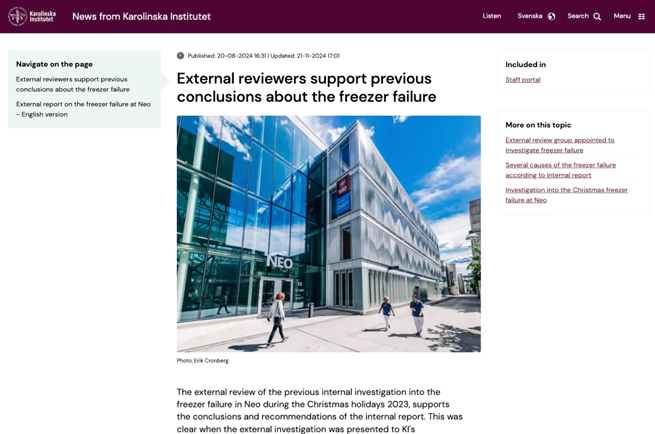
Source: Karolinska Institutet (ki.se)
Before the holiday begins, inspect the area surrounding your storage equipment.
Confirm that access control, fire protection, and security systems are functioning properly.
Remove any obstacles that could interfere with ventilation or emergency operations.
Test remote monitoring systems to ensure alarms can be received promptly if abnormal conditions occur.
Storage temperatures are within the specified operating range.
Liquid nitrogen levels in both storage and supply tanks are sufficient for the entire holiday period.
Backup power supplies and liquid nitrogen delivery systems are operational.
Equipment monitoring and remote alarm systems are functioning correctly and capable of detecting abnormal operating conditions in real time.
The temperature readings are stable.
Verify the reliability of the power supply.
Check that scheduled data backups have completed successfully.
Test backup power and emergency cooling systems.
Ensure monitoring and remote alarm functions are fully operational.
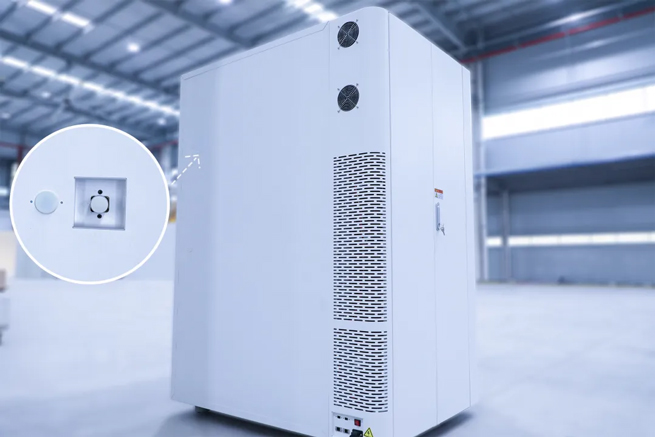
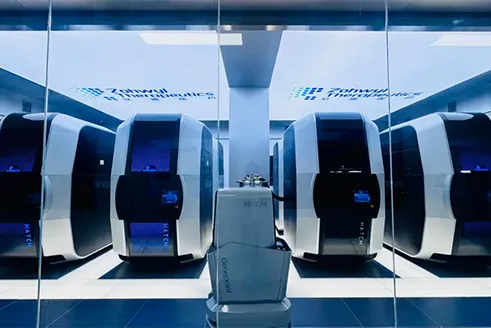
Sample Retrieval Monitoring in Hatch
Even with preventive maintenance, unexpected situations can occur. Laboratories should have a documented emergency response plan covering scenarios such as:
Equipment malfunction
Power outages
Liquid nitrogen supply interruption
Emergency sample relocation
In addition, personnel should be familiar with emergency procedures, and up-to-date contact information for equipment suppliers and service providers should be readily available.
Establish a clear communication plan for the holiday period. If possible:
Assign on-call personnel who can respond to alarms.
Define responsibilities for emergency response.
Ensure critical contacts can be reached at any time.
Protecting biological samples is an ongoing responsibility that extends beyond normal working hours. Regular equipment inspection, reliable monitoring systems, and comprehensive emergency planning all contribute to maintaining sample integrity and reducing operational risk.
At Genepoint, we are committed to helping laboratories and biobanks safeguard valuable biospecimens with reliable automated sample storage solutions, intelligent monitoring technologies, and responsive technical support—so your samples remain protected 24/7, even during holidays.