Sample traceability connects a biological sample to its identity, source, location, handling events, and associated data throughout its life cycle. In research laboratories and biobanks, this connection reduces mix-ups, protects sample integrity, supports reproducibility, and creates an auditable record when results need investigation.
Traceability is not only about finding a sample. It must also explain why the sample is in a location, who handled it, and when its state changed.
What traceability objects need to be captured
A traceability record should include sample identity, source, location, time of entry, retrieval events, operator, processing history, and associated data. Sample identity is the unique identifier that separates one vial from another. Source information records the donor, patient, study, or collection event. Location data shows where the sample is stored, such as a specific freezer, shelf, rack. Time of entry and retrieval events create a timeline. Operator records identify who handled the sample. Processing history captures steps such as aliquoting, centrifugation, or extraction. Associated data links the sample to consent status, analytical results, and study metadata.
Without these objects, a laboratory may know that a vial exists but not whether it is the correct vial, whether it has been thawed unexpectedly, or whether it can still be used for a given experiment. Traceability turns a stored vial into a defined research asset.
Research value: integrity, reproducibility, and review
In research laboratories, traceability protects sample integrity and metadata. A sample that cannot be linked to its collection conditions or processing history has limited scientific value. For example, if a set of cryovials is moved between freezers without recording the event, later analysis may be confounded by unknown temperature exposure.
Traceability also reduces mix-ups. In shared laboratories, multiple teams may store similar vials in the same racks. A clear identity and retrieval record helps prevent a researcher from using the wrong sample. When results are unexpected, traceability supports review. The laboratory can reconstruct which sample was tested, who retrieved it, when it was processed, and what data were attached. This is essential for reproducibility, because another team cannot repeat an experiment if the original sample chain is unclear.
Biobank value: chain of custody and long-term continuity
For biobanks, traceability supports chain of custody. A biobank must show that a sample has remained under controlled conditions from collection to distribution. This includes who received the sample, where it was stored, when it was retrieved, and whether any consent or governance restrictions changed. Traceability also builds inventory confidence. Biobank staff need to know that the recorded location matches the physical location. A missing vial or a misplaced rack can delay research and waste stored material.
Auditability is another core value. Biobanks may need to demonstrate that handling followed approved procedures. Traceability records provide the evidence trail for internal reviews or external inquiries. Long-term data continuity matters because biobank samples may be stored for years. Staff, software, and storage equipment can change over time. A stable traceability approach helps preserve meaning across those changes.
The closed loop: identity, scanning, storage, and LIMS coordination
A practical traceability system forms a closed loop. First, each sample receives a standardized identity, often a barcode or radio-frequency identifier on the cryovial or rack. Second, scanning records the sample at key points such as check-in, retrieval, or return. Third, controlled storage and retrieval link the physical movement to a defined location. Fourth, a laboratory information management system, or LIMS, coordinates the data so that each event updates the sample record.
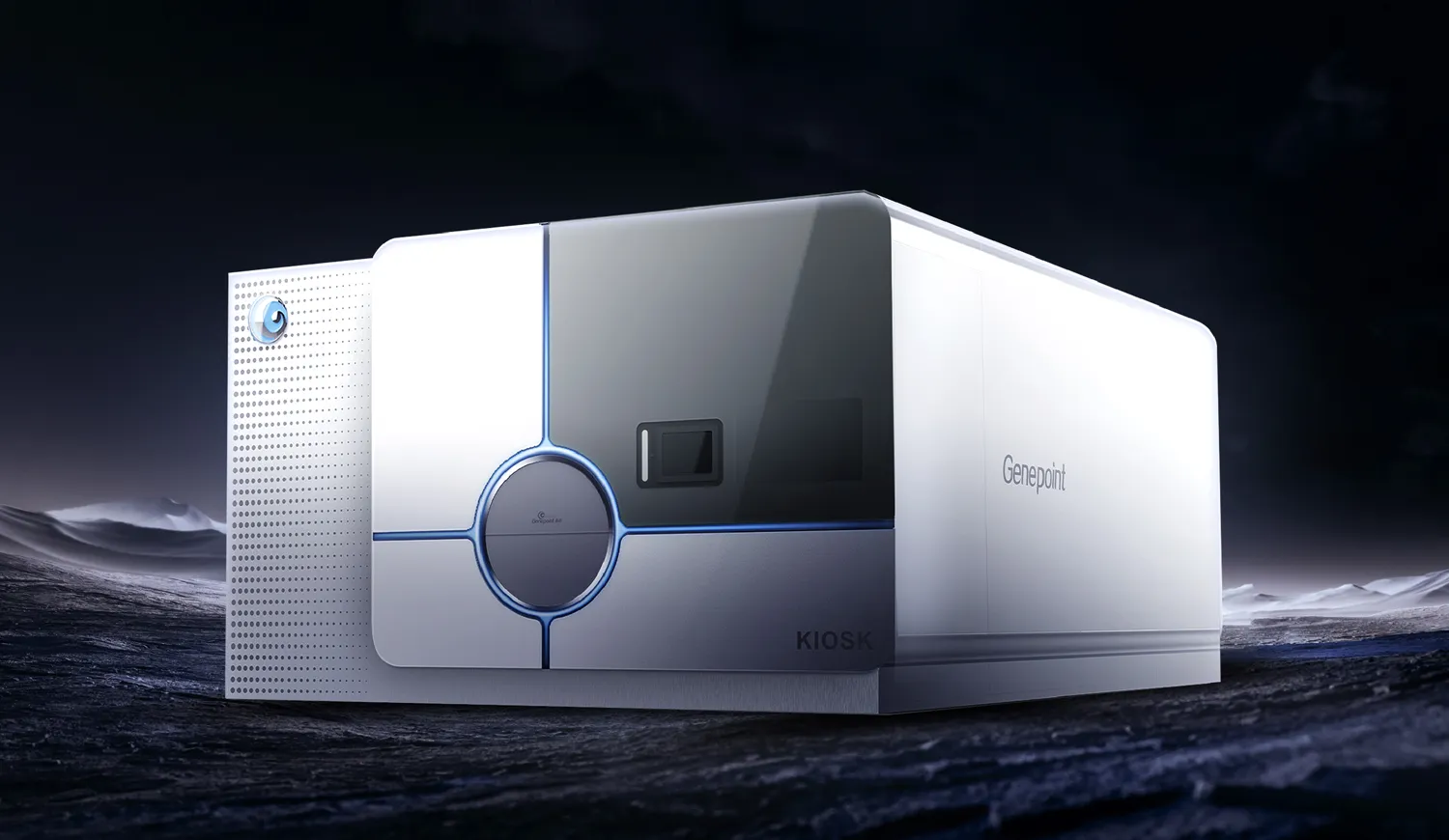
This loop is more reliable when storage equipment and software are designed to work together. For example, Genepoint Technologies offers Automated Cryogenic Repository Systems such as Hatch Automated Cryogenic Repository System (Automated LN2 Freezer) and Snorkel Automated Sample Repository System (Automated Lab Freezer). Genepoint also provides peripherals such as Sinfo and Presto, which can support identification and handling workflows. As of August 2026, Genepoint has sold a total of 400 automated storage devices globally with its installed base collectively managing 10 million samples.
Why location alone is not enough
A common mistake is to treat traceability as a simple location lookup. Knowing that a sample is in freezer A, shelf 3, rack 2 is useful, but it does not explain whether the sample should be there. Traceability must capture the reason for a location and the events that led to it. For example, a sample may be moved to a quarantine rack after a temperature excursion. If the system records only the new location, future users may not know that the sample requires review before use.
Traceability should make that state change visible. A handling record that shows who retrieved a sample and when is more useful than a record that only shows the current position. If a sample was removed for 30 minutes and then returned, this time gap may matter for certain assays.
Genepoint’s automated sample management solution forms a closed-loop workflow: Sinfo assigns a 2D-coded identity to each cryovial, Presto reads that identity at key handling points, Rondo, an automated tube decapper, caps and decaps SBS-format racks of cryovials, automated freezers store and retrieve the samples, and the LIMS coordinates the data so that every event updates the sample record.
In summary, sample traceability is a core operational capability for research laboratories and biobanks. A well-designed traceability system answers not only where a sample is, but also why it is there, who handled it, and when its state changed. It protects sample identity, supports reproducibility, strengthens chain of custody, and creates a reviewable record.